From Pilot to Scale: Breaking Out of 'Pilot Purgatory'
AI systems researcher and practitioner
- AI adoption
- enterprise AI
- pilot programs
- organizational change
Most pilots fail to scale. Not because the tech doesn't work, but because the organization isn't built to let it.
In large organizations, the gap between a working pilot and real scale can feel like a canyon. The tech is sound, the ROI is there — then the effort stalls inside standards, policies, and committees that were never designed for the new thing you are trying to deploy.
I once had an executive say, "It is easier to connect my phone to my home Wi-Fi than to get a field tablet online at work." He was right. Years of PC hardening created a fortress that protects legacy systems but blocks modern tools. Many companies had a decade to adapt to smartphones and still struggle with mobile.
The pace of change is only accelerating. Emerging technologies like AI will diversify faster and blend into every operational layer. Large bureaucracies that can't adapt risk losing ground to smaller, more agile competitors who can deploy without legacy friction.
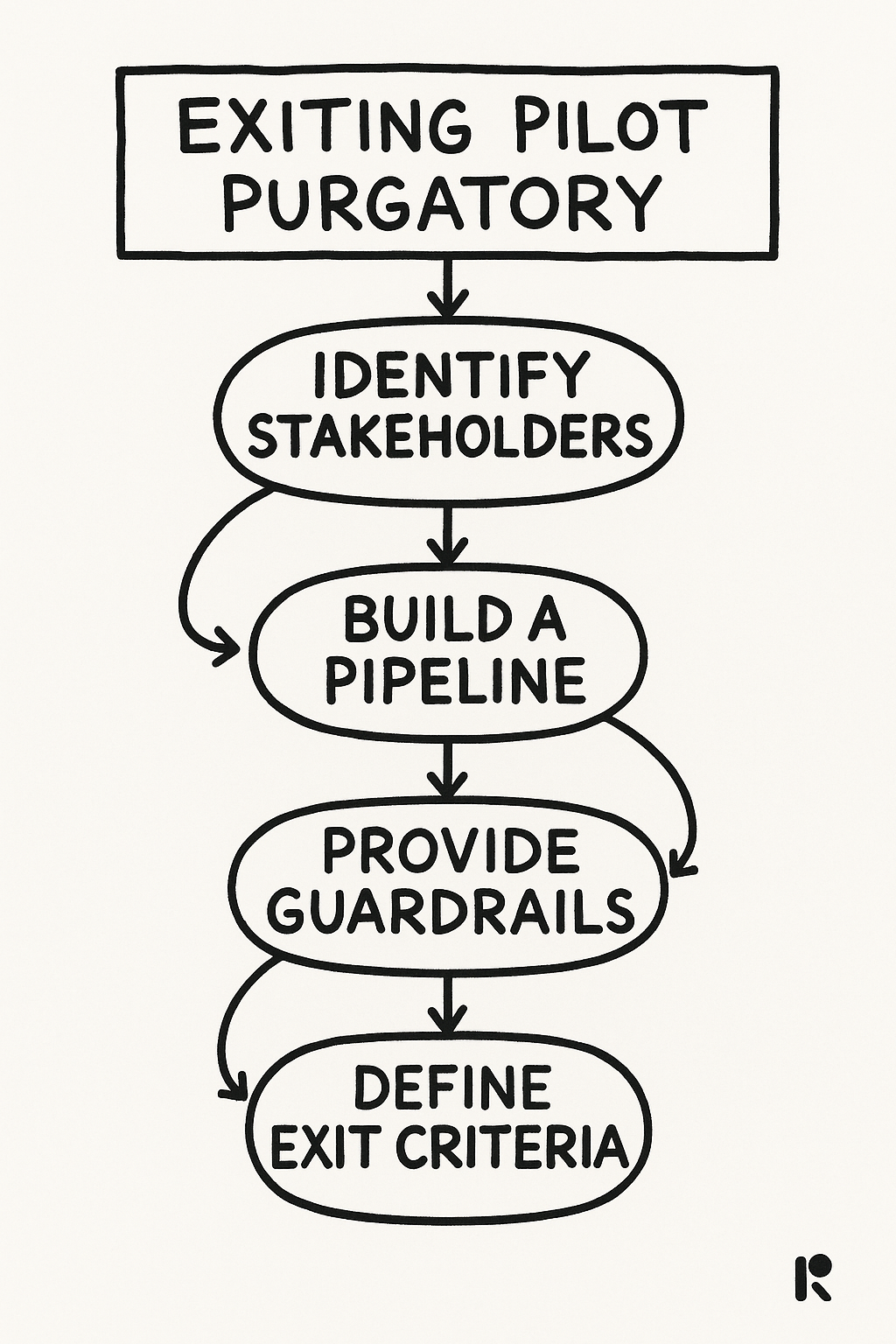
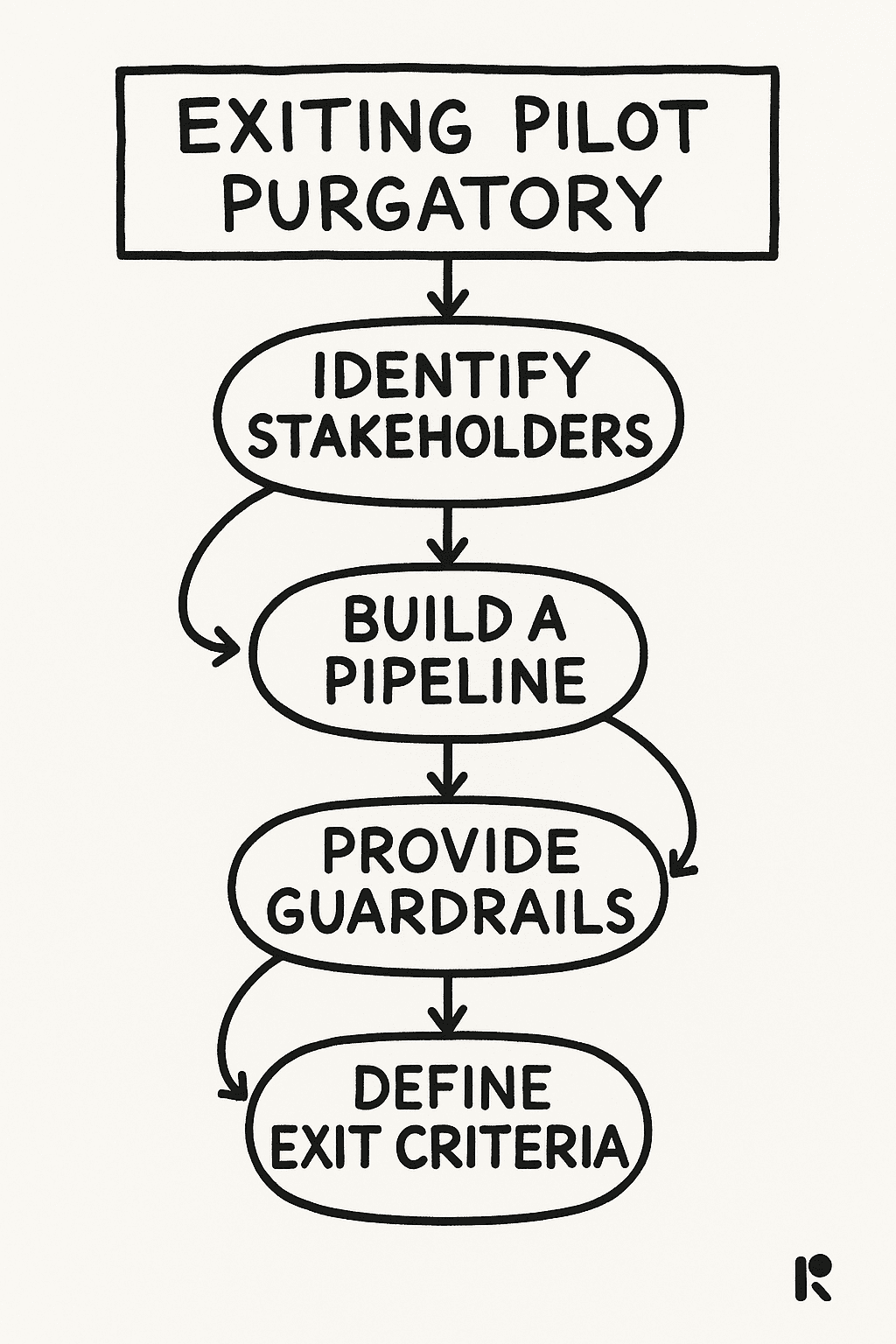
The fix is not to ignore standards. It is to design a pilot that evolves them. That requires identifying the right people early and building a pipeline to pilot success.
Build the Pipeline Early
-
Map the stakeholders on day one: security, network, wireless, identity, device management, data privacy, safety and compliance, legal and procurement, site operations. Name the owners, define their decisions, and set service levels for the pilot.
-
Create a simple intake and orchestration flow: one request form that triggers a shared plan, task owners, timeboxes, test segments, templates, and preapproved exceptions.
-
Give the pilot room to run inside guardrails, then define clear criteria for scaling.
-
Tie success metrics to business outcomes: reduced cycle time, improved safety, fewer truck rolls, lower energy use, better yield. Assign each KPI to the stakeholder who cares about it.
-
Pilot regionally before going global. Prove the model in one context, capture lessons, update the standard, then expand.
Not every control applies everywhere. Scaling requires publishing recommendations and variants that fit different sites and regulatory environments.
I covered these strategies at the Pilot to Scaled Success: Overcoming Pilot Purgatory panel at the 11th Annual Digitalization in Oil and Gas Conference in Houston, Texas. The through line is simple: respect the rules, expose the bottlenecks, build a pipeline that turns pilots into standards, then scale what works.
Get the methodology, not just the conclusions
Subscribe on Substack
The posts here are the finished argument. Subscribe for the reasoning behind it — the edge cases, the things that didn't fit neatly, and work in progress before it's ready to publish.
Subscribe on Substack →